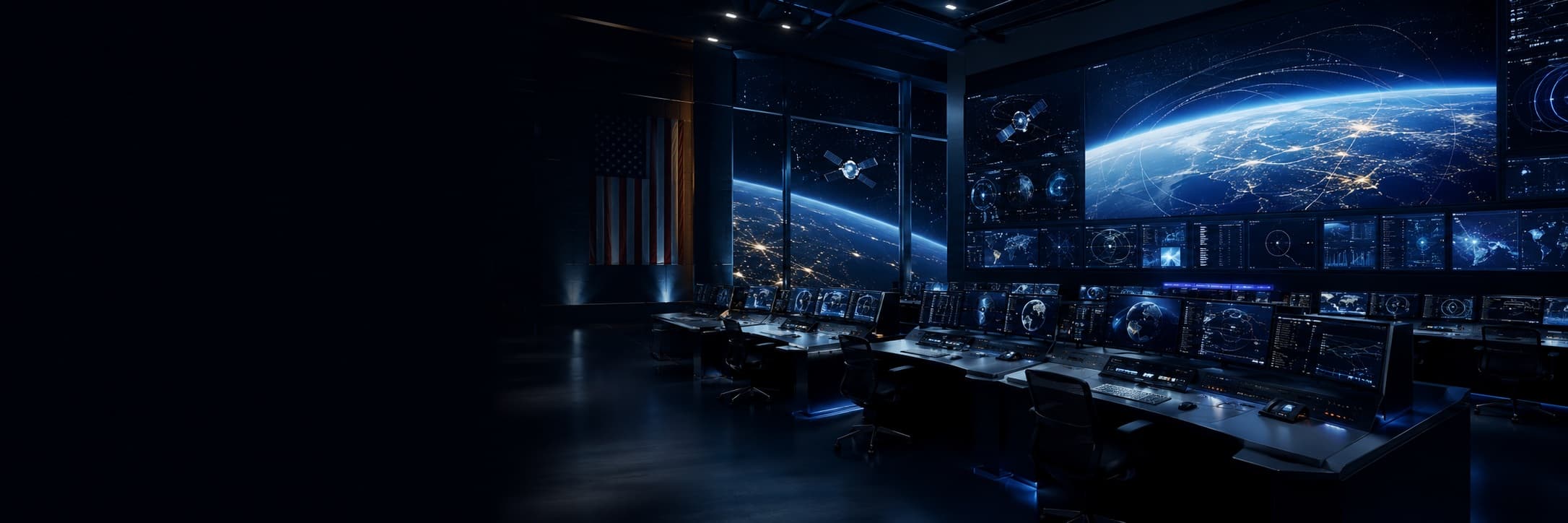
U.S. Space Force
The Space Force organizes, trains, and equips Guardians to protect U.S. interests in space and provide space capabilities to the joint force.
Overview
The United States Space Force (USSF) is the sixth and newest branch of the U.S. Armed Forces, established on December 20, 2019. It is the first new independent military service since the Air Force was created in 1947 — and the first dedicated space force of any nation in the world.
Space Force members are called "Guardians" — a name chosen to reflect their mission of protecting U.S. interests above the Earth. With approximately 8,400 active-duty Guardians, the Space Force is the smallest of the six branches but operates in arguably the most strategically critical domain. Space-based systems underpin every aspect of modern warfare and civilian life: GPS navigation, satellite communications, weather forecasting, missile warning, and financial transactions all depend on satellites orbiting above.
The Space Force was carved out of the Air Force's existing space enterprise, which had managed military space operations since the 1980s. It oversees roughly 77 military satellites, ground-based missile warning systems, space surveillance networks that track over 27,000 objects in orbit, and the national security space launch program.
Space has become a contested domain. China and Russia have developed weapons capable of jamming, blinding, or physically destroying U.S. satellites. The Space Force exists to protect those assets and ensure American advantage in space is maintained.
History
The history of the Space Force begins with the broader story of America's space program. The Army and Air Force began launching military satellites in the late 1950s during the Cold War, recognizing space as a new strategic high ground. The Air Force's Air Defense Command and later Air Force Space Command (AFSPC), established in 1982, managed these growing military space missions for nearly four decades.
Throughout the 1990s and 2000s, military satellites became increasingly central to American warfighting. The Gulf War (1991) was the first true "space war," with GPS-guided munitions, satellite communications, and imagery intelligence playing decisive roles. The military became so reliant on space that defense planners began calling it a "critical dependency" — which also made it a vulnerability.
As China conducted a successful anti-satellite (ASAT) missile test in 2007 and Russia demonstrated co-orbital weapons in the 2010s, momentum built for a dedicated service focused on space as a warfighting domain. Multiple defense reviews recommended separating military space from the Air Force to ensure it received the focus, resources, and organizational advocacy it needed.
President Trump signed the Space Force into law on December 20, 2019. General John "Jay" Raymond became the first Chief of Space Operations. In 2021, the Space Force began directly commissioning Guardians and stood up its own training pipeline. The service continues to develop doctrine, organization, and capabilities for an era in which space is no longer a sanctuary.
Mission
The Space Force's mission is to organize, train, and equip Guardians to conduct global space operations that enhance the way our joint and coalition forces fight, while also defending U.S. interests in space.
This mission has three dimensions:
Enabling the Joint Force: The Space Force operates the GPS constellation that guides precision munitions and enables navigation for billions of people worldwide; the satellite communications networks connecting commanders to forces on every continent; the missile warning systems that detect ballistic missile launches within seconds of liftoff; and the space surveillance networks tracking every object in orbit — from active satellites to debris.
Defending U.S. Space Assets: As adversaries develop the capability to attack U.S. satellites through directed energy weapons, co-orbital maneuvering vehicles, electronic jamming, and cyberattacks, the Space Force develops doctrine, equipment, and trained Guardians to protect those assets and ensure they remain functional even during armed conflict.
Contesting Adversary Space Operations: If directed by national leadership, the Space Force can deny adversaries the use of their own space-based capabilities, maintaining U.S. advantage in the space domain as an essential element of national power.
Major Commands
- Space Operations Command (SpOC) — The primary warfighting command; operates U.S. military satellites, conducts orbital warfare, provides space-based intelligence and communications to the joint force, and monitors all objects in Earth orbit.
- Space Systems Command (SSC) — Develops, acquires, and fields the Space Force's satellites, launch vehicles, and ground systems; manages the national security space launch program that contracts with commercial providers like SpaceX and United Launch Alliance.
- Space Training and Readiness Command (STARCOM) — Oversees training, education, and doctrine development for all Guardians; establishes professional military education standards and develops the intellectual foundations of space warfighting.
Traditions, Motto & Symbols
Motto: Semper Supra ("Always Above") The Space Force motto captures both the literal domain — above the Earth — and the aspiration for superior vigilance and performance. It joins a proud tradition of Latin "Semper" mottos alongside the Marine Corps' Semper Fidelis ("Always Faithful") and the Coast Guard's Semper Paratus ("Always Ready").
Official Song: "Semper Supra" Composed in 2020 and debuted in 2021, "Semper Supra" is the first new official U.S. military service song in over 70 years. Written by a team of composers selected through a Space Force competition, the song reflects the service's forward-looking identity and space-oriented mission.
Colors: Navy Blue and Silver Navy blue connects the Space Force to its Air Force heritage and evokes the depth of space itself. Silver represents the modern, technological, and future-focused character of the service — as well as the stars of the night sky.
The Delta Symbol: The Space Force's primary emblem features a delta (a triangle pointing upward) — a shape used in aerospace and rocketry contexts for decades. It represents change, direction, upward trajectory, and the innovative spirit of the space domain.
Guardian Name and Identity: The term "Guardian" was selected through a service-wide vote in 2020, reflecting the protective nature of the Space Force's mission. The distinctive enlisted rank titles — Specialist (E-1 through E-4) and Sergeant (E-5 through E-9) — are unique among U.S. military services.
Career Paths
The Space Force offers a technically focused set of career specialties centered on space operations, cyber, intelligence, engineering, and acquisition — reflecting the highly technical nature of its mission.
Enlisted Guardians complete the same Basic Military Training (BMT) as Air Force Airmen at Joint Base San Antonio-Lackland in Texas, then proceed to specialized training in their Guardian Specialty Code (GSC). Current enlisted specialties include Space Systems Operations (1C6X1), Cyber Operations (3D0X4), Intelligence (1N0X1), and Space Launch Operations. Enlisted Guardians who transferred from the Air Force retained their AFSCs while transitioning to Space Force organizational structures.
Commissioned Officers may commission through the Air Force Academy (which commissions Space Force officers alongside Air Force officers), ROTC programs at participating universities, or Officer Training School (OTS). Key officer specialties include Space Operations Officer (13S), Acquisition Officer, Intelligence Officer, and Cyberspace Operations Officer.
Cross-Service Transfers: The Space Force actively recruits qualified members from other branches — especially those with space, cyber, or intelligence backgrounds — through an established inter-service transfer process.
Education and Development: The Space Force places exceptional emphasis on continuous professional education in orbital mechanics, space systems engineering, and space domain awareness. Many Guardians pursue graduate degrees in physics, aerospace engineering, and computer science through civilian universities or the Air Force Institute of Technology (AFIT).
FAQ
What does the Space Force actually do every day? Guardians track every object in Earth orbit (including debris the size of a softball), operate the GPS satellites that billions of people rely on, monitor continuously for ballistic missile launches, provide satellite communications to military forces worldwide, and develop the doctrine and capabilities to defend U.S. space assets from growing adversary threats.
Is the Space Force separate from NASA? Yes. NASA is a civilian research and exploration agency focused on science and human spaceflight. The Space Force is a military service responsible for national security space operations. They collaborate on some activities — such as launch range safety — but have entirely different missions, authorities, and chains of command.
How do I join the Space Force? Enlisted Guardians enlist through the same process as the Air Force, sharing MEPS processing and Basic Military Training at Lackland AFB. Officers commission through the Air Force Academy, ROTC, or OTS. Visit SpaceForce.mil for current recruiting information and specialty requirements.
Why does the U.S. need a separate Space Force? Space has become a contested warfighting domain where America's adversaries have demonstrated the ability to attack U.S. satellites. A dedicated service ensures space receives the focus, resources, and organizational advocacy needed to defend these critical assets — and develop the doctrine, training, and culture of Guardians who think about space as a warfighting domain first.
What are Space Force enlisted ranks called? Space Force enlisted members at E-1 through E-4 are called "Specialists" (e.g., Specialist 1 through Specialist 4). E-5 through E-9 are called "Sergeant," "Technical Sergeant," "Master Sergeant," "Senior Master Sergeant," and "Chief Master Sergeant." These distinctive titles are unique to the Space Force among all U.S. military services.
Official Resources
U.S. Space Force — spaceforce.mil