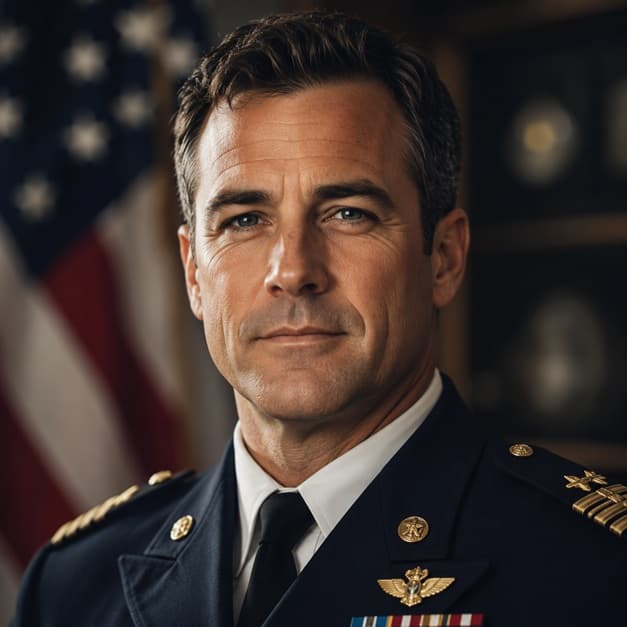
USMilitaryAtlas.com is your authoritative, free reference for everything about the United States Armed Forces. Explore all six military branches — the Army, Navy, Marine Corps, Air Force, Space Force, and Coast Guard — alongside the five federal service academies, complete enlisted and officer rank tables, Medal of Honor recipients, and a searchable timeline of American military history stretching from 1775 to the present day.
About the U.S. Military Branches
The United States military is divided into six branches, each with a distinct mission, culture, and area of operations. The U.S. Army, established June 14, 1775, is the oldest and largest branch, responsible for sustained land-based combat operations. The U.S. Navyprojects sea power across the world's oceans and operates the largest carrier strike force on earth. The U.S. Marine Corpsspecializes in rapid expeditionary operations, often serving as the nation's first responders in crisis situations.
The U.S. Air Force dominates the skies with more than 5,400 aircraft and provides close air support, strategic bombing, airlift, and aerial refueling capabilities. The U.S. Space Force, established December 20, 2019, is the newest and smallest branch, protecting American interests in orbit and cyberspace. The U.S. Coast Guardserves a dual law-enforcement and military role, guarding America's coastlines, ports, and inland waterways while standing ready to deploy alongside the Navy in wartime.
Compare all six branches →U.S. Military Service Academies
The United States operates five federally funded service academies that commission officers into the armed forces. West Point (U.S. Military Academy) — founded in 1802 on the Hudson River — is the oldest and has produced graduates including Ulysses S. Grant, Robert E. Lee, Dwight D. Eisenhower, and Douglas MacArthur. The U.S. Naval Academy in Annapolis commissions officers for both the Navy and Marine Corps; its graduates include Presidents Jimmy Carter and John McCain.
The U.S. Air Force Academy in Colorado Springs, the U.S. Coast Guard Academy in New London (the only academy that does not require a congressional nomination), and the U.S. Merchant Marine Academy in Kings Point round out the five institutions. All offer a four-year, fully funded education in exchange for a service commitment of at least five years after graduation.
Explore the service academies →Military Ranks & Pay Grades
All branches share the same pay-grade system — E-1 through E-9 for enlisted personnel, W-1 through W-5 for warrant officers (Army, Marine Corps, and Coast Guard), and O-1 through O-10 for commissioned officers. Titles differ by branch: an E-7 is a Sergeant First Class in the Army, a Gunnery Sergeant in the Marine Corps, a Chief Petty Officer in the Navy, and a Master Sergeant in the Air Force and Space Force.
The four-star general and admiral grades (O-10) represent the highest permanent ranks in peacetime. The five-star ranks — General of the Army, Fleet Admiral, and General of the Air Force — have been held by only a small number of officers, most recently during World War II.
Browse rank tables for all branches →250 Years of Military History
From the musket volleys at Lexington and Concord in 1775 to drone operations in the 21st century, the U.S. military has fought in every major global conflict and shaped the modern world order. Key milestones include the Battle of Yorktown (1781), the Civil War (1861–1865), the Meuse-Argonne Offensive (1918), D-Day at Normandy (1944), the Inchon Landing (1950), the fall of Saigon (1975), Operation Desert Storm (1991), and the post-9/11 campaigns in Afghanistan and Iraq.
The Medal of Honor— the nation's highest military decoration — has been awarded 3,500+ times since the Civil War. More than 40 Medal of Honor recipients were graduates of service academies. Browse our interactive history timeline, Medal of Honor profiles, and the list of U.S. presidents who served in uniform.
Explore military history →