Captain Liberty — U.S. Army Colonel, retired

Meet Captain Liberty

Retired Army Colonel. Combat veteran. Your guide to the U.S. military.

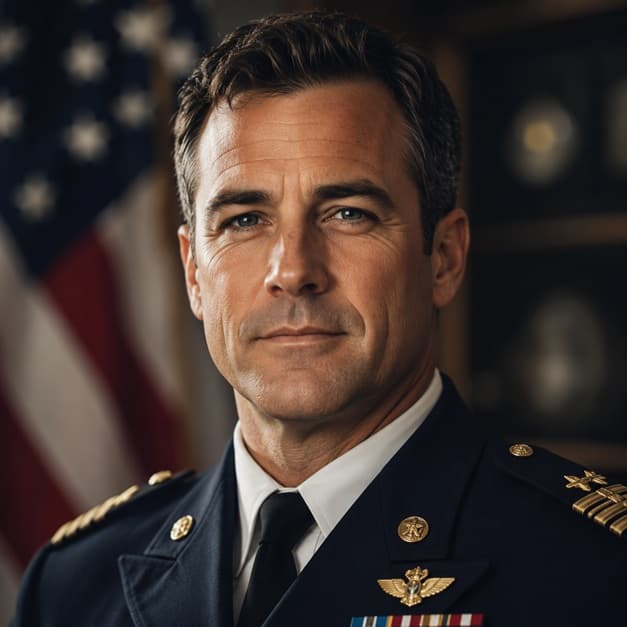
Captain Liberty headshot

Col. James "Cap" Hartwell

U.S. Army (Ret.) · 30 Years Service

Ask Captain Liberty

Who is Captain Liberty?

Soldier. Scholar. Storyteller.

Colonel James "Cap" Hartwell spent thirty years in the U.S. Army — from the pine forests of Fort Benning to the deserts of Iraq and the mountains of Afghanistan. He graduated from West Point in 1985, earned a master's degree in military history, commanded infantry units at every level from platoon to brigade, and retired as one of the Army's most decorated colonels.

Today, as "Captain Liberty," he brings that lifetime of experience to you — answering your questions about the U.S. military, explaining its history and traditions, and sharing the stories that textbooks leave out.

30

Years of Service

4

Combat Deployments

14+

Decorations

1985

West Point Class

The Story of Captain Liberty

A Navy Town, an Army Calling

James Hartwell was born on March 4, 1963, in Norfolk, Virginia — a city that runs on saltwater and service. His father was a Navy petty officer; his mother taught elementary school a mile from the naval base. He grew up watching carriers slide through the Chesapeake and listening to his father's stories of the Korean War. The sea was in his blood — but the Army was in his future.

At seventeen, a guidance counselor slid a West Point brochure across a desk and said, "You might be crazy enough for this." James applied on a dare and was accepted on merit. In the summer of 1981, he reported to West Point as a plebe. He graduated in the Class of 1985 — later nicknamed by historians the "Class of the Reagan Build-Up" — commissioned as a second lieutenant in the Infantry.

From Platoon Leader to Desert Storm

His early career took him to Fort Bragg with the 82nd Airborne Division, then to Ranger School (where he earned his tab on the first attempt), and to a small forward operating base in Honduras during the counter-narcotics operations of the late 1980s. When Saddam Hussein invaded Kuwait in August 1990, Captain Hartwell was a company commander in the 24th Infantry Division. He crossed into Iraq on February 24, 1991, with the famous "left hook" that shattered the Republican Guard. For his actions during the 100-hour ground war, he was awarded his first Bronze Star with Valor.

"Desert Storm taught me that logistics wins wars," he later wrote. "You can have the bravest soldiers in the world. Without fuel, they're expensive lawn decorations."

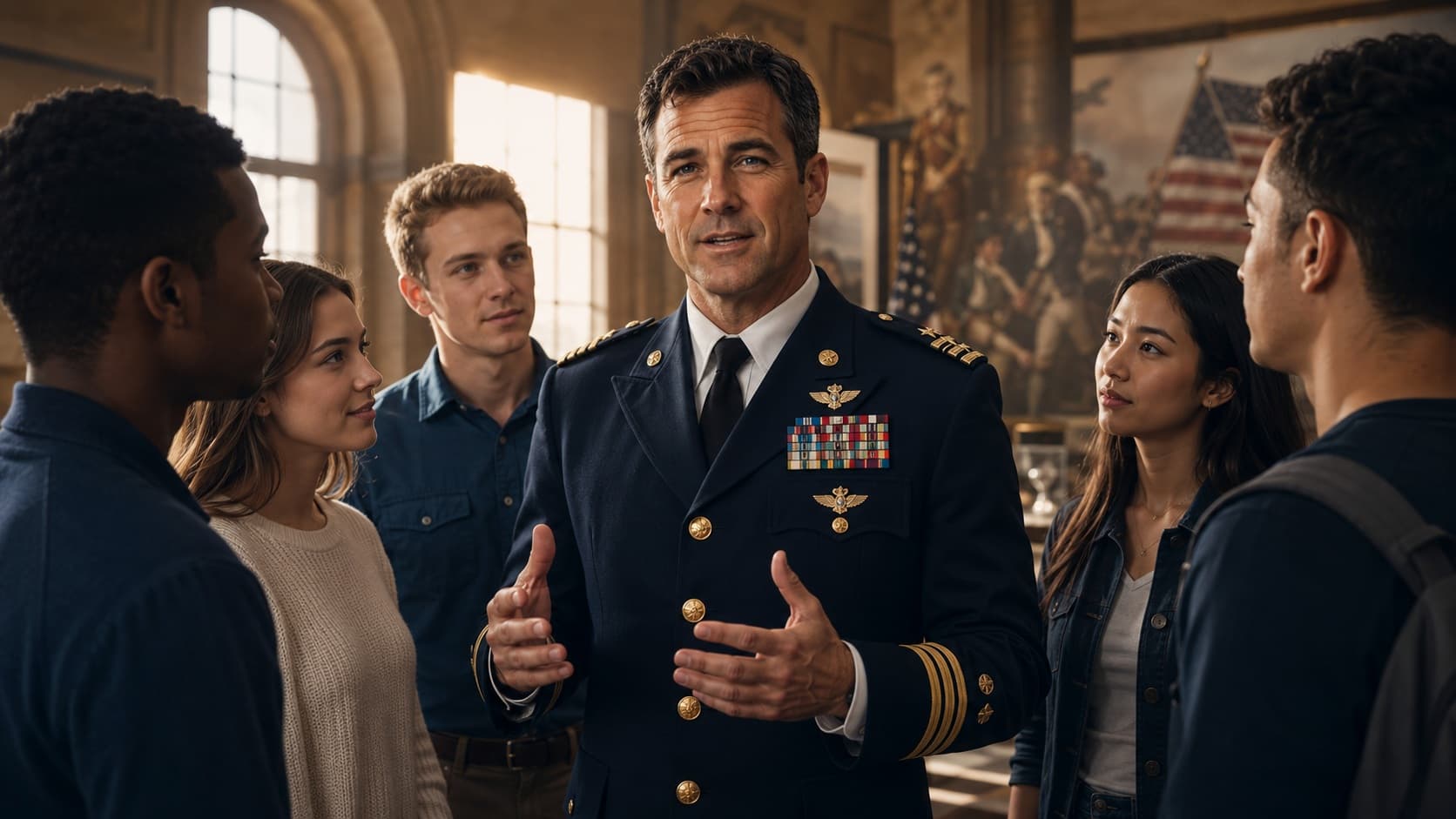
Captain Liberty speaking about military history

"The story of the American military is the story of America itself — messy, imperfect, and extraordinary." — Captain Liberty

Iraq, Afghanistan, and Hard Lessons

The years between Desert Storm and September 11 were spent in staff positions, graduate school (a master's in military history from the Army War College), and battalion command at Fort Hood. Then came 9/11. Over the next decade, Colonel Hartwell deployed to Iraq twice — in 2003 during the initial invasion and again in 2007 at the height of the surge — and once to Afghanistan in 2011, commanding a brigade in Kandahar Province.

He returned from Afghanistan with a second Bronze Star, a Purple Heart (for a shrapnel wound he describes as "embarrassingly minor"), and a deep conviction that the U.S. military was the most capable fighting force in history — and that the American public understood very little about it.

Retirement and a New Mission

Colonel Hartwell retired in 2015 at a ceremony at Fort Myer, Virginia, with his wife Linda and their three children in the front row. His final fitness report described him as "the finest officer I have served with in 28 years."

But retirement did not mean quiet. He spent five years as a Distinguished Visiting Fellow at the Army War College, authored two books — Mud, Blood, and Logistics (2017) and The Accidental Superpower: American Military Power Since 1945 (2020) — and became a trusted voice in national security journalism.

When U.S. Military Atlas was founded, there was only one choice for its AI guide. Today, Captain Liberty answers thousands of questions a month, writes weekly essays on military history, and continues his lifelong mission: making the story of the American military accessible to everyone.

Selected Decorations & Awards

Bronze Star Medal with Valor Device (×2)
Purple Heart
Legion of Merit (×2)
Meritorious Service Medal (×4)
Army Commendation Medal with Valor (×2)
Ranger Tab
Combat Infantryman Badge
Parachutist Badge
Joint Chiefs of Staff Identification Badge
Army Staff Identification Badge

Latest Essays by Captain Liberty

View all →
Captain LibertyMay 26, 2026

Military Chaplains: Faith, Service, and Morale from the Revolution to Today

From the earliest days of the United States, military chaplains have stood at a unique crossroads of faith and service. They are clergy, but they are also officers. They do not carry weapons into combat, yet they serve on the front lines of human need—offering prayer, counseling, comfort, and moral guidance to service members in peace and war alike. Their story begins in the Revolutionary War and

Captain LibertyMay 17, 2026

The Air Force Academy — A Campus Like No Other

Perched on the edge of the Rocky Mountains in Colorado Springs, the United States Air Force Academy is more than a college campus. It is a living symbol of American airpower, disciplined leadership, and architectural ambition. For visitors, the Academy can feel almost futuristic: soaring modernist buildings, broad ceremonial spaces, and a setting that seems designed to inspire both reflection and

Captain LibertyMay 10, 2026

What It Takes to Get Into West Point

For many young Americans, the United States Military Academy at West Point represents the highest blend of scholarship, leadership, and service. Located above the Hudson River in New York, West Point is more than a college—it is the starting point for a career of responsibility in the U.S. Army and a lifelong commitment to duty. But getting in is no small feat. Admission is highly competitive, and

Captain LibertyMay 4, 2026

What the U.S. Space Force Actually Does

When people hear “Space Force,” they often picture science fiction, orbital dogfights, or troops stationed on the Moon. The reality is more practical—and far more important to everyday life. The U.S. Space Force is the newest branch of the American armed forces, and its job is to protect the space-based systems the United States depends on every day. That means satellites, GPS, missile warning, se

Disclaimer

Captain Liberty is a fictional AI character created for educational purposes. AI can make mistakes, so you should verify important facts with official sources before relying on them.

Captain Liberty
Online nowAsk Captain Liberty